
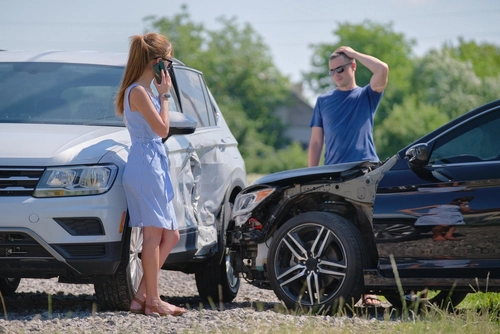
Your Fault Doesn’t Mean Your Case Is Lost
If you believe you share responsibility for a car accident, you likely worry that partial fault disqualifies you from compensation. Colorado law recognizes that accidents rarely involve just one at-fault party, and being partially responsible doesn’t bar you from seeking damages. Many accident victims hesitate to pursue compensation because they mistakenly believe any contribution eliminates their legal options.
Understanding Colorado’s comparative negligence laws can make the difference between walking away empty-handed and recovering compensation for medical bills, lost wages, and vehicle repairs. An auto accident lawyer in Denver provides legal knowledge to counter insurance companies who may unfairly assign you more blame than you deserve.
💡 Pro Tip: Document everything at the accident scene, even if you think you might be partially at fault. Your immediate perception may not reflect the full legal picture of liability.
Even if you share some fault in your Denver auto accident, recovery is still within reach. Contact Jarret J. Benson Law for guidance that puts your best foot forward. Speak to us at (720) 710-6753 or contact us today to explore your options.

Colorado’s Modified Comparative Fault Rule Explained
Colorado follows a modified comparative negligence rule allowing accident victims to recover damages if they are less than 50% at fault. If you’re found 49% responsible or less, you can pursue compensation, though your recovery reduces by your fault percentage. For example, if awarded $100,000 in damages but found 30% at fault, you would receive $70,000.
Fault determination involves analyzing evidence, witness statements, police reports, and accident reconstruction. Insurance companies frequently shift more blame onto victims to minimize payouts. An auto accident lawyer in Denver counters these tactics and ensures fair fault assignment based on evidence rather than insurance company interests.
Civil accident claims use the "preponderance of evidence" standard, meaning you need to show it’s more likely than not that the other party’s negligence caused your injuries—a lower burden than criminal cases.
💡 Pro Tip: Never admit fault at the accident scene or to insurance adjusters. Even saying "I’m sorry" can be misconstrued as guilt admission. Stick to factual statements.
The Path from Accident to Settlement When Fault Is Disputed
Colorado’s statute of limitations gives you three years from the accident date to file a lawsuit, but waiting compromises evidence quality and witness availability. The process typically unfolds over several months to years, depending on case complexity.
- Immediate aftermath (0-72 hours): Seek medical treatment, report to police, notify insurance, and document injuries
- Investigation phase (2-8 weeks): Insurance companies investigate, collect statements, and make initial fault determinations
- Negotiation period (2-6 months): Your auto accident lawyer in Denver negotiates to challenge unfair fault assignments
- Litigation if necessary (6 months – 2 years): File lawsuit if negotiations fail, engage in discovery, potentially go to trial
- Resolution (varies): Settle out of court (90% of cases) or receive jury verdict determining fault and damages
💡 Pro Tip: Keep a daily journal documenting injuries, pain levels, and daily activity impacts. This contemporaneous record provides powerful evidence regardless of partial fault.
Building Your Case Despite Shared Fault
Successfully pursuing compensation when you share fault requires strategic case building and thorough evidence collection. Jarret J. Benson Law understands Colorado’s comparative fault system and works to minimize your assigned fault percentage while maximizing the other party’s liability through traffic camera analysis, witness interviews, accident reconstruction, and identifying all contributing factors.
Insurance companies use aggressive tactics to increase your fault percentage, including misrepresenting statements and rushing unfair settlements. An auto accident lawyer in Denver protects against these strategies and preserves your rights. Your attorney identifies instances where the other driver violated traffic laws or engaged in negligent behaviors significantly contributing to the accident.
Multiple parties can share fault in an accident. If another driver ran a red light while you slightly exceeded the speed limit, the other driver likely bears majority fault. Colorado courts examine all contributing factors when assigning percentages.
💡 Pro Tip: Request copies of all accident reports from officers and insurance investigators. Discrepancies between reports can reveal opportunities to challenge fault determinations.
Common Scenarios Where Partial Fault Still Allows Recovery
Real-world accidents rarely involve perfect victims and completely reckless defendants. Understanding common partial-fault scenarios helps accident victims recognize their cases have merit despite shared responsibility.
Rear-End Collisions with Contributing Factors
While rear-end collisions typically fault the following driver, the front driver can share responsibility. If rear-ended but your brake lights weren’t functioning or you stopped suddenly without cause, you might bear 10-20% fault. However, the following driver still likely bears primary responsibility for maintaining safe following distance. An auto accident lawyer in Denver can establish that despite your vehicle’s mechanical issue, the other driver’s negligence was the predominant cause.
These cases involve detailed investigation into maintenance records, weather conditions, and traffic patterns. Even with minor negligence, Colorado law permits recovery of the majority of damages when the other driver’s conduct was substantially more negligent.
💡 Pro Tip: Regular vehicle maintenance documentation defends against claims that mechanical failures increased your fault percentage. Keep all service records organized.
Evidence That Shifts Fault Percentages in Your Favor
Evidence quality and quantity significantly impacts fault determinations. Modern technology provides numerous sources that can challenge initial fault assessments and reveal the true sequence of events.
Technology and Witness Testimony in Fault Disputes
Dashboard cameras, surveillance footage, and smartphone data increasingly play crucial roles in accident reconstruction. If you consult a lawyer after your accident, they can quickly preserve electronic evidence before it’s overwritten. Independent witness statements often carry more weight than involved parties’ accounts, making prompt witness identification essential.
Denver Vision Zero Statistics reflect the city’s Safe System approach, which recognizes that humans make mistakes and that crashes result from multiple contributing factors — including system design, infrastructure, policies, and human behavior — emphasizing shared responsibility rather than attributing crashes primarily to human error. The city’s Safe System Approach acknowledges that people make mistakes, supporting the legal principle that fault rarely rests entirely with one party. Your auto accident lawyer in Denver can use this data-driven approach to contextualize your accident.
💡 Pro Tip: Check for traffic cameras at nearby intersections through Denver traffic management. This footage may be available for only 30 days, so act quickly.
Insurance Company Tactics in Partial Fault Claims
Insurance adjusters receive extensive training in minimizing claim payouts, particularly when partial fault creates opportunities to reduce settlements. Understanding their common tactics helps accident victims protect their rights and avoid accepting unfair blame.
Recorded Statements and Fault Manipulation
Insurance companies often request recorded statements immediately after accidents when victims are stressed and may not fully understand what happened. These statements frequently include leading questions designed to elicit fault admissions or create inconsistencies. Legal representation before providing statements protects against these tactics and ensures your words aren’t twisted to increase your fault percentage.
Legal standards require insurers to substantiate fault determinations with actual evidence, not just interpretations of statements. An auto accident lawyer in Denver can challenge unsupported fault assignments and demand proper investigation rather than accepting quick assessments designed to minimize payouts.
💡 Pro Tip: You’re not legally required to provide a recorded statement to the other party’s insurance company. Politely decline and direct them to your attorney.
Frequently Asked Questions
Understanding Partial Fault in Colorado
Many accident victims have questions about how partial fault affects their ability to recover compensation. These concerns are valid, as fault determinations significantly impact case outcomes.
💡 Pro Tip: Write down all questions before meeting with an attorney to ensure comprehensive answers about how partial fault might affect your specific situation.
Next Steps After a Partial-Fault Accident
Knowing what to do after an accident where you might share fault helps protect your rights and preserve your claim. Quick action often makes the difference between fair compensation and unfair blame assignment.
💡 Pro Tip: Create a dedicated folder for all accident-related documents. Organization simplifies the legal process and ensures nothing important gets lost.
1. What happens if I’m found to be 50% or more at fault for my Denver auto accident?
Under Colorado’s modified comparative negligence rule, being 50% or more at fault bars you from recovering any compensation. This makes accurate fault determination crucial. An experienced Colorado auto accident attorney can investigate whether evidence supports a lower percentage, potentially salvaging your right to recovery.
2. Can I still recover compensation if I received a traffic citation at the accident scene?
Yes, receiving a traffic citation doesn’t automatically prevent recovery or establish your fault percentage. Citations are one piece of evidence among many. Your Denver car accident attorney can challenge citations and present evidence showing the other driver’s greater contribution.
3. How do insurance companies determine fault percentages in Colorado auto accidents?
Insurance companies examine police reports, witness statements, physical evidence, traffic laws, and sometimes accident reconstruction. They often use computer programs that assign fault based on accident type. However, these initial determinations aren’t final. A Denver personal injury lawyer can challenge these assessments with additional evidence.
4. Should I accept a settlement offer if the insurance company says I’m partially at fault?
Don’t accept any settlement without understanding your rights under Colorado auto accident laws. Insurance companies often overstate your fault percentage to reduce payouts. Consult a lawyer to evaluate whether the fault assessment is fair and if the settlement adequately compensates your damages.
5. How long do I have to file a Denver auto accident lawsuit if fault is disputed?
Colorado’s statute of limitations gives you three years from the accident date to file a lawsuit. However, starting sooner preserves evidence and witness memories. Consulting an auto accident attorney Denver residents trust helps you understand optimal timing for your case.
Work with a Trusted Auto Accidents Lawyer
Partial fault doesn’t have to derail your accident claim. Colorado’s comparative negligence laws exist because lawmakers recognize that accidents often result from multiple contributing factors. Understanding these laws and how to apply them requires legal knowledge and experience with insurance company tactics. The difference between accepting an unfair fault assessment and fighting for accurate determination can mean thousands of dollars in recovered compensation.
If you’ve been injured in an accident where fault is disputed, taking prompt action protects your rights and improves your chances of fair recovery. Evidence disappears, witnesses forget details, and insurance companies work quickly to close claims with minimal payouts. Qualified legal representation ensures your side receives proper consideration and that fault percentages reflect actual evidence rather than insurance company interests.
Feeling like you’re partially to blame for your Denver auto accident? Don’t let uncertainty steer your course. Reach out to Jarret J. Benson Law for tailored legal advice. Give us a call at (720) 710-6753 or contact us today and let’s navigate your path to compensation together.